 Star In A Star
Background
This is the third in a series of three New York City-themed science kits. The topic of this one is the Solar System.
Scientists often use models to simplify a real object or system. The essence of a model is that it simplifies the object or system that it is modeling. By simplifying something we can often understand it better.
A model can shrink the object it is modeling. Think of a model car — a toy — and imagine that every other thing in the car scales down in size as well. There is a little steering wheel and a little person who has a little cup holder and is wearing a tiny jacket. It's the same car only smaller.
There is a special type of model called a scale model. A scale model shrinks everything the same amount so that you end up with a small version of the object.
We are going to build a scale model of the entire Solar System scaled to the Empire State Building. In order to build the model, we first have to shrink the Empire State Building! We will start with a human-sized version of the Empire State Building. We will end up with a solar system that is as big as our body and is a scale model of the Empire State Building at the same time.
Goals
Learn the names and the order of the planets and other objects in the solar system (the Kuiper Belt and the Asteroid Belt). Understand the almost incomprehensible size of the solar system and compare it to two other scales — the human body and the Empire State Building.
Recapture the insight and experience every time you look at the Empire State Building in NYC. Imagine a 10 cm Sun on top of the spire and you are on the ground at the same distance as Pluto from the Sun. Experiencing this model puts you in the solar system every time you look at the Empire State Building.
Science
Scientists use models to understand concepts. The solar system is too big to "see" all at once! So to understand it, scientists make models. Many times, these are scale models. All of the planets and solar system objects orbit the Sun (which is the center of the Solar System).
Setup and Location
The only set up is to introduce the concept of a "scale model" before beginning this kit.
Materials
- Printed card with the distance key and schematic of how the tape should look at the end (and other cool info about the solar system and the Empire State Building — see basic version in the appendix).
- Roll of cash register tape — allocate 2 meters per person.
- Felt tip pen.
- Sharp pencil.
- Other items not included with the kit: scissors.
Activity Steps
We are going to mark the locations and label the planets on the paper tape.
- Unroll the paper tape strip so that it matches your height
- Cut or rip the tape so it is the same height as your body from head to toe
- Write Sun at the top and Kuiper Belt (Pluto) at the floor end of the tape
- Fold it in half, make a nice crease, fold it in half again, and unfold — write Uranus at the fold in the middle, write Neptune at fold closer to the Kuiper Belt, write Saturn at the fold closer to the Sun
- Fold the Sun to Saturn, crease, and unfold — write Jupiter at the new fold
- Fold the Sun to Jupiter, crease, and unfold — write Asteroids at the new fold
- Fold the Sun to Asteroids, crease, and unfold — write Mars at the new fold
- Fold the Sun to Mars, crease then fold that part in half again, crease, and unfold both previous folds — you will now have 3 unmarked creases.
- Starting from the fold nearest Mars, write Earth, then Venus, then Mercury
- Now, find the sharpest pencil you can get and make the smallest dot you can make with it next to the word Sun — that tiny dot is the size the Sun would be in this model
- Your Solar System is complete!
- (optional) Draw a very tall Empire State Building on the tape with the spire at the Sun and the base at the Kuiper Belt. Some parts of the building are located near solar system objects — for instance, the observation deck is located near the Asteroids. See the card for a picture of other parts of the building and where they match with solar system objects.
Takeaways for Participants
Establish a scale that makes sense that the participants can use to imagine the distances at any point later on. For instance: how big is the sun at this scale? How much space does your pinky fingernail cover at this scale?
Compare the length of your solar system roll to your partner's.
Compare your scale (1–2 meters) to the Empire State Building (443 meters).
Viral Video Demo (Optional)
Video of the Empire State Building showing the solar system bodies as lights. This could be 3D modeled and imaged in a video to popularize the scale of the Solar System compared with the Empire State Building.
Credit for original paper tape scale model: astrosociety.org "Pocket Solar System"
Appendix (facts and notes)
How the paper tape should be folded

Notes on the Scale models — including the Size of the Sun
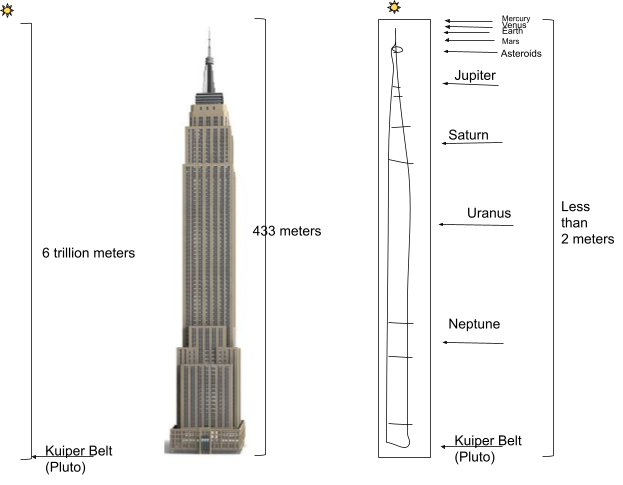
Scale is:
About 1:200 from tape to building — the building is about 200 times bigger than you.
About 1:3 trillion from tape to solar system — the solar system is 3 trillion times bigger than you! At this scale the Sun is a tiny dot on the paper 0.4 mm in diameter (just a speck, really).
About 1:14 billion from building to solar system — 14 billion Empire State Buildings stacked on top of each other would fit between the Sun and the Kuiper Belt. At this scale all 4 inner planet orbits (Mercury, Venus, Earth, and Mars) are in the top part of the spire!
At this scale the Sun will be 10 centimeters in diameter! Imagine a 10 centimeter diameter ball (a little bigger than a softball) Sun propped up on top of the spire — it would be barely visible from the "ground" (the Kuiper Belt — Pluto).
Imagine the Empire State Building laying down on its side and begin orbiting around this tiny Sun. To follow the orbit of Pluto, the base of the building would swing a wide arc like the hand of a clock over the course of 220 years!
Step-by-step photos
| Paper Tape (for calculators) | 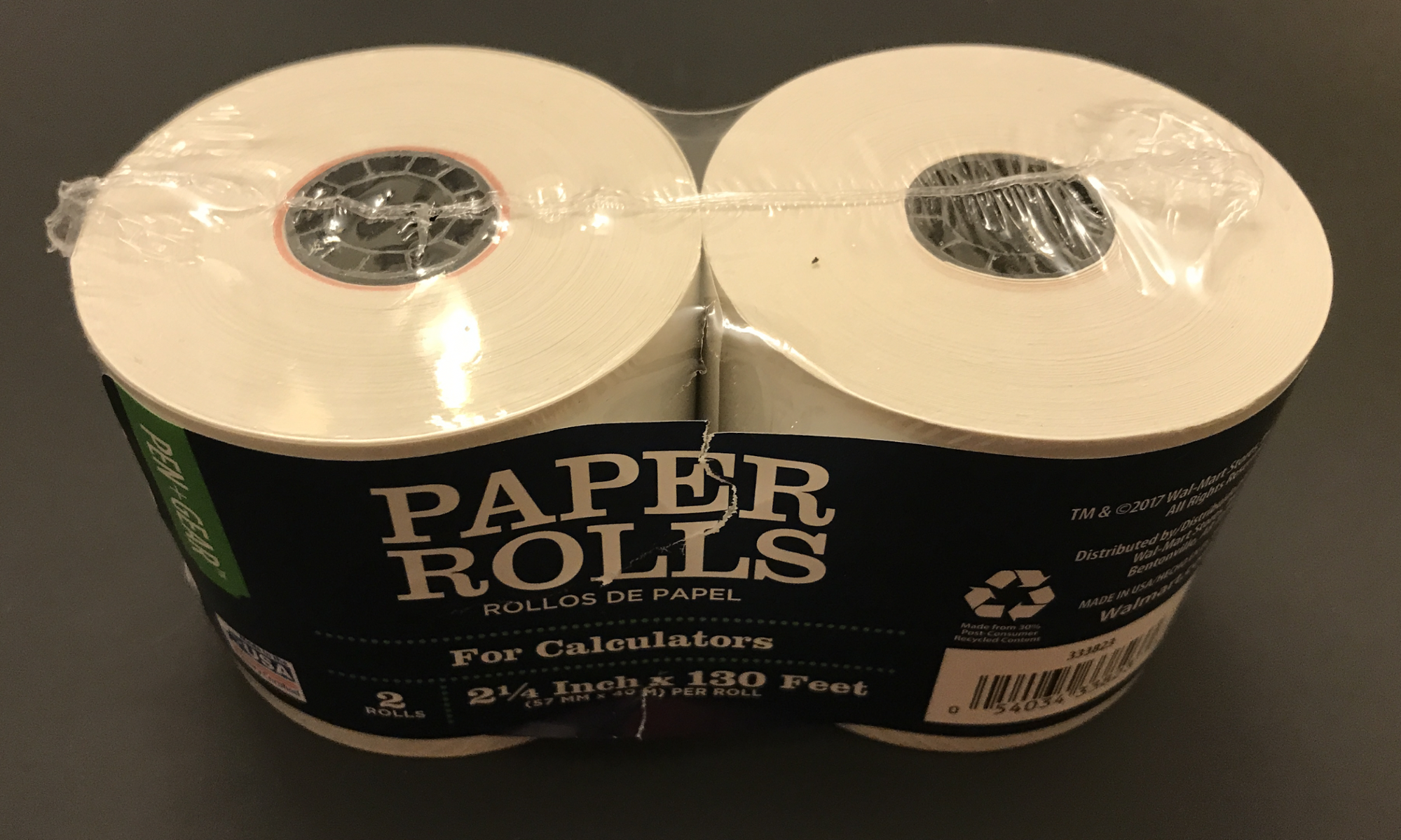 |
| Cut | 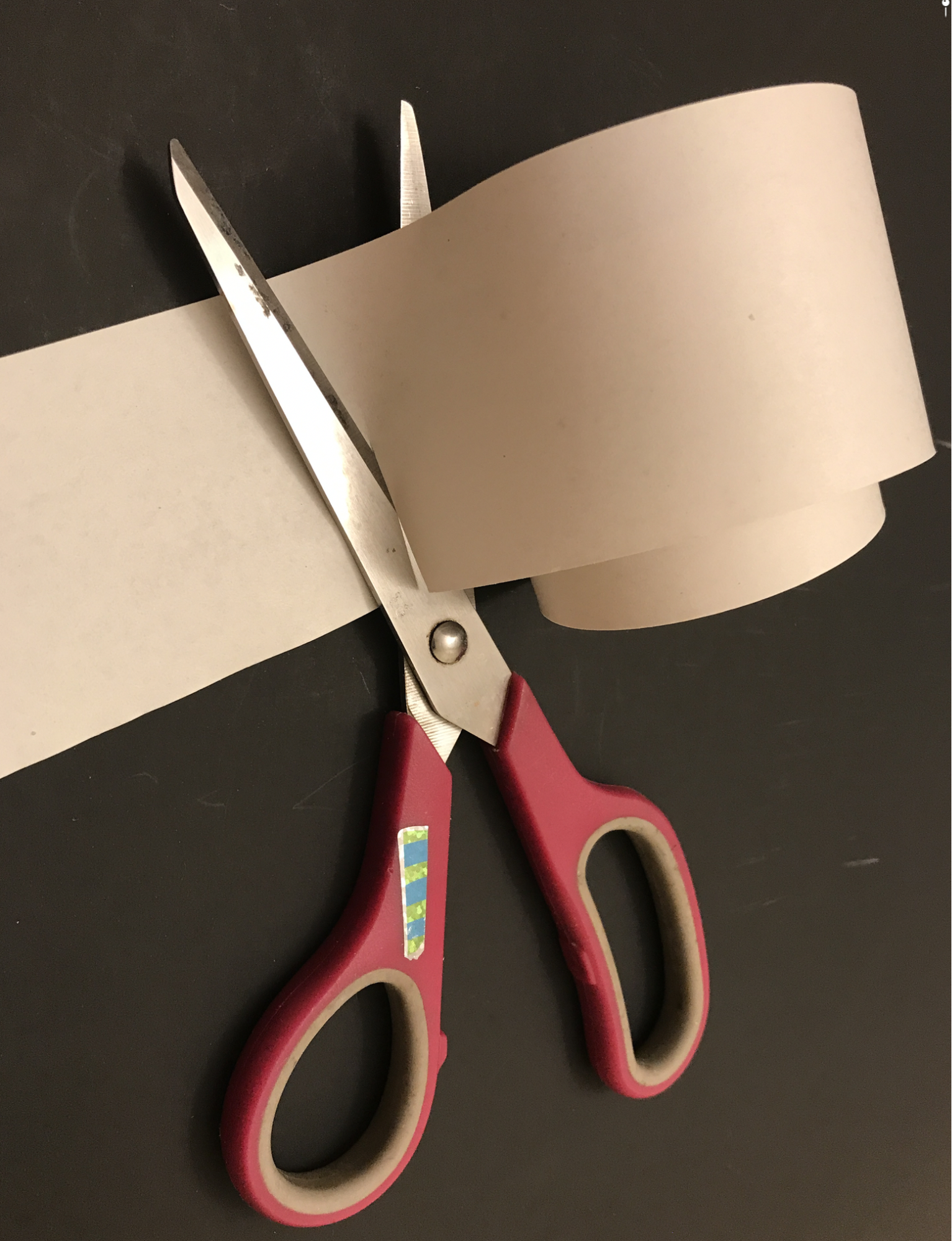 |
| Before folding | 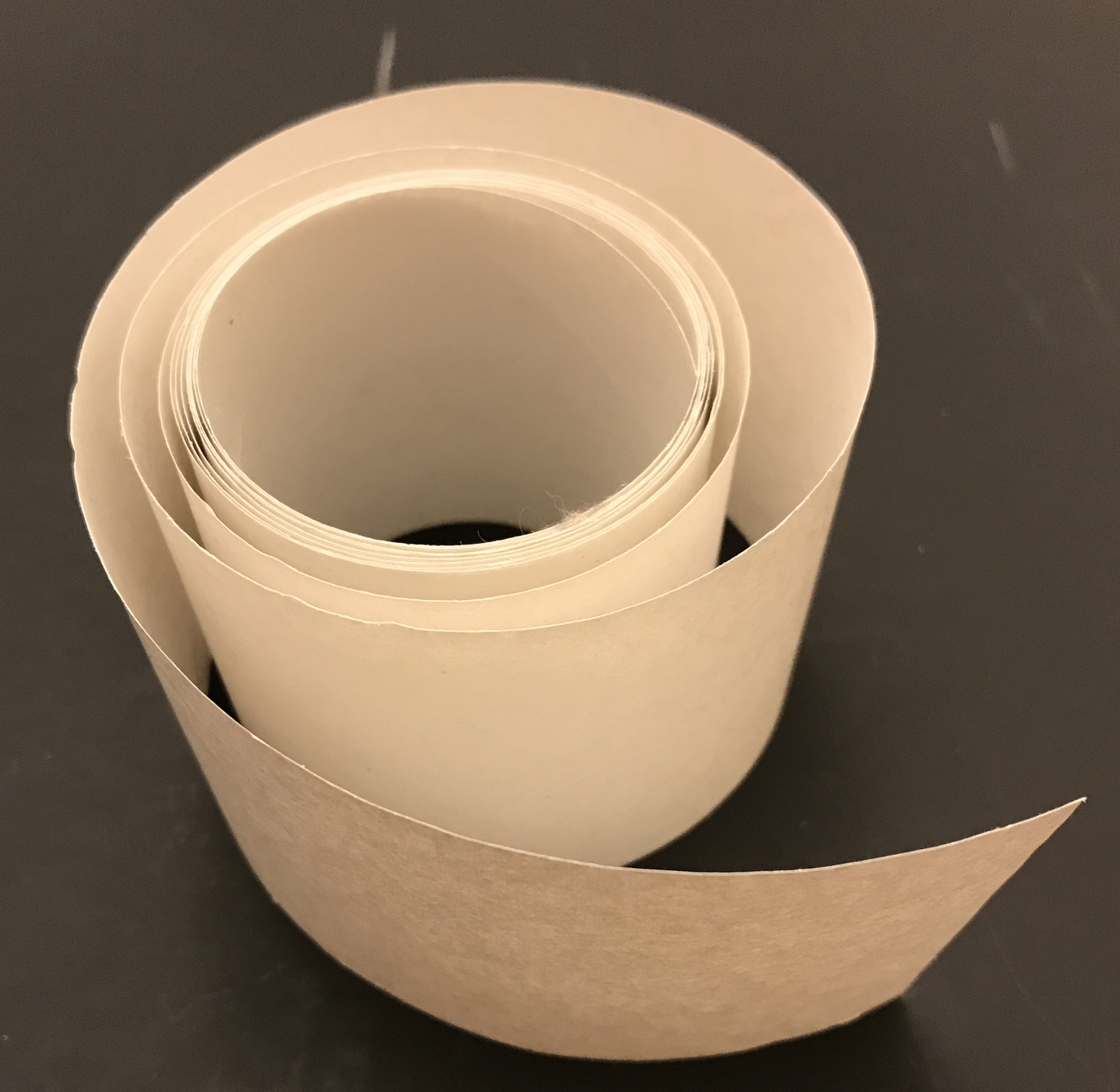 |
| Start with Sun and Pluto | 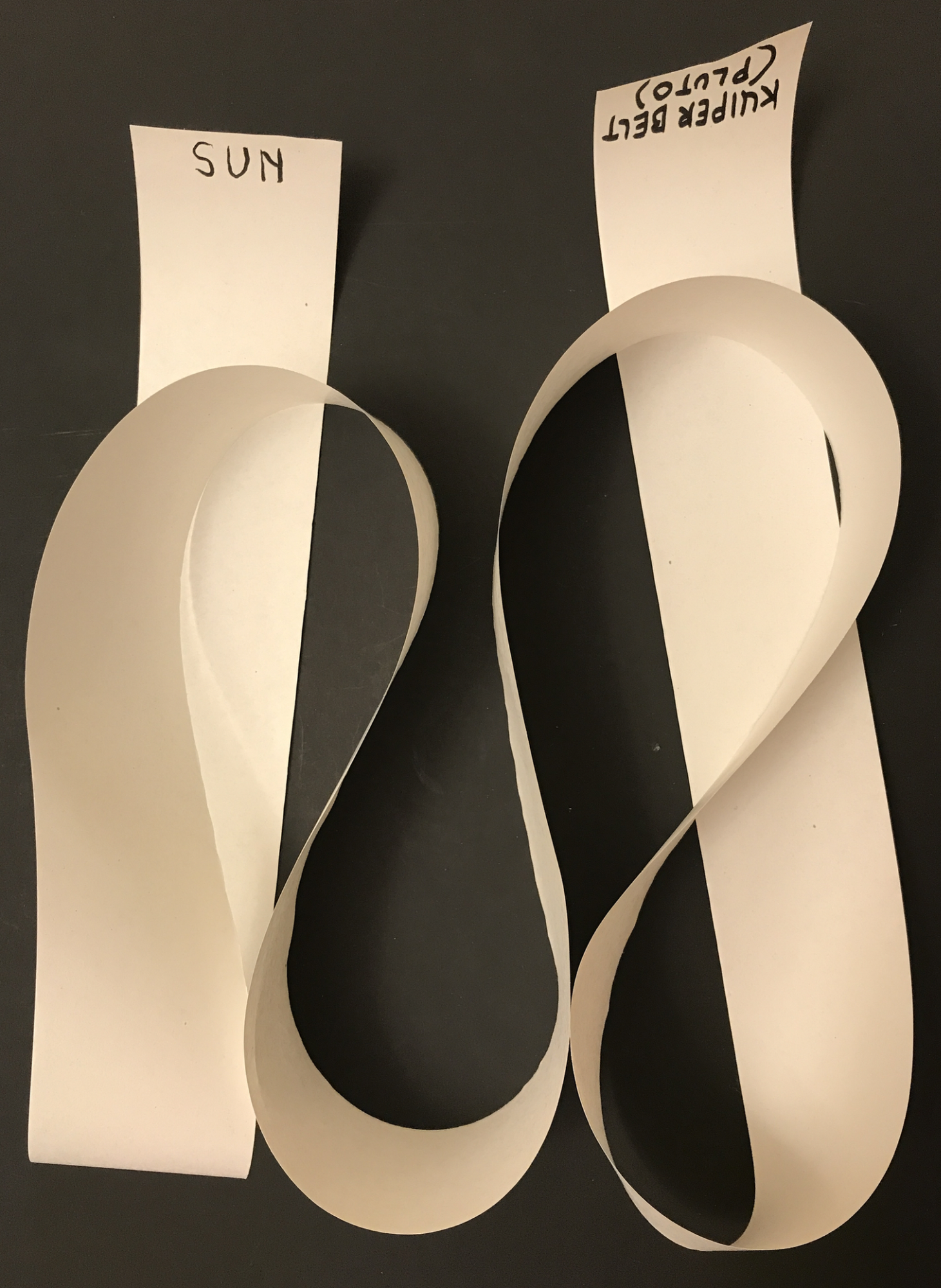 |
| The finished tape with a quick sketch of the Empire State Building. Optional: The image could be pre-printed on the tape for a "keepsake" souvenir. |  |
| Close up showing the inner planets and the Asteroids at the same level as the observation deck. | 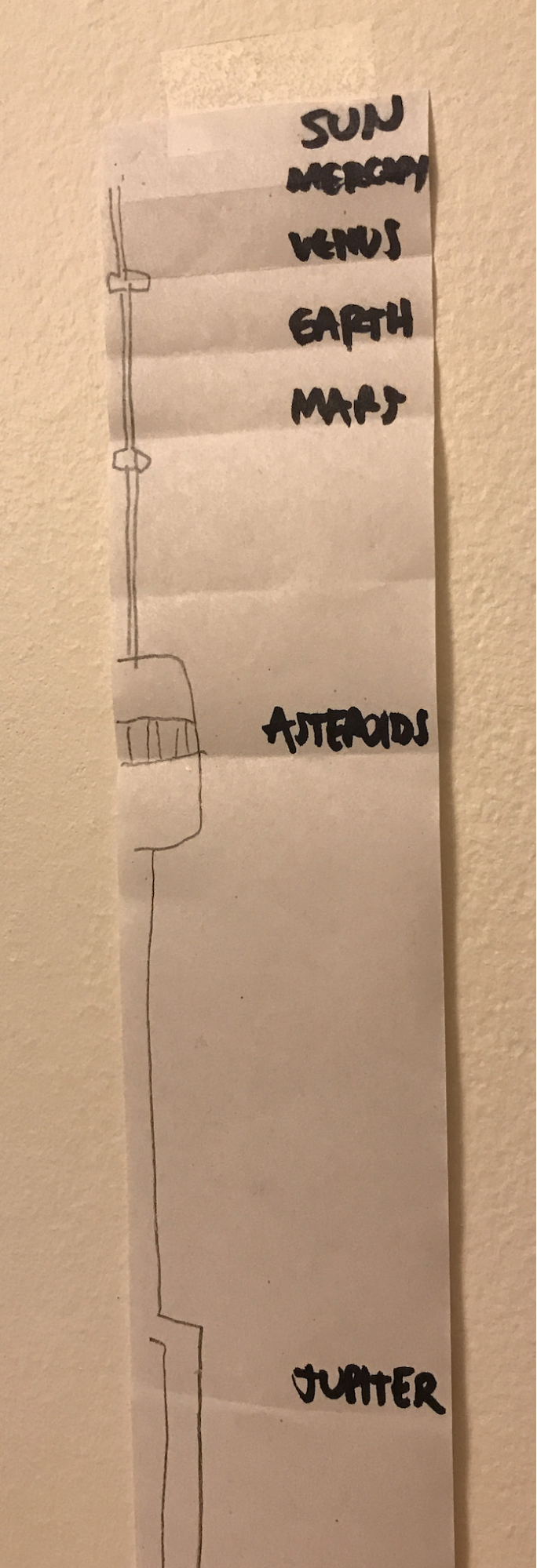 |
Author: Daniel Cummings Contact: Visit contact page or starinastar.com