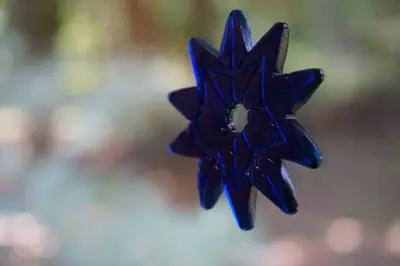
Star In A Star
Customer Reviews
★★★★★
That is the most I have ever learned about stars!! We loved it!
★★★★★
Its very cool to see how the constellations like Orion gradually move across the sky which the star spot shows! I used mine many times a week.
Ideas for How to Use Your Star Spot to Learn About the Sky
- Track the pole star. Watch Polaris trace its tiny 1-degree circle around the true celestial pole.
- Watch circumpolar constellations rotate. Observe them as they cross your sighting pole throughout the night.
- Follow seasonal changes. Notice how the Big Dipper and Cassiopeia shift orientation with the seasons.
- Find the guard stars of the Little Dipper. Use them to estimate sidereal time and the pole's position.
- Feel the dome of the sky. Standing at the center of your Star Spot, experience the full hemisphere above you.
- Practice daytime observing. Can you visualize where the constellations are during the day? Try it, then check at night.
- Mark equinox and solstice points. Place markers at azimuth positions around your Star Spot to indicate where the Sun rises and sets at the equinoxes and solstices. Use local landscape features as natural reference points.
- Find your zenith. Look straight up and identify what star or constellation is directly overhead right now.
- Use your landscape to orient. Trees, buildings, and ridgelines become permanent sky markers once you learn what rises and sets behind them.
- Note star rising points. Like the Polynesian ocean navigators who used shell charts to mark star positions on the horizon, you can learn where key stars rise and set.
- See stars as pointers to other stars. Use star alignments to find sky locations like the ecliptic pole (in Draco's curve) or the galactic pole (in Coma Berenices).
- See the countries in the sky. Every point on the sky is the zenith of somewhere on Earth. See the zenith map to discover which countries are directly above you.
- Find and mark cardinal directions. Mark N, E, S, W on the ground nearby, or note features on your horizon that correspond to each.
- Visualize the meridian. Look south and imagine the meridian line stretching from due south overhead to the North Star and down to the northern horizon.
- Find meridian transit stars. Timing when stars cross the meridian was essential amateur astronomy work in the 1800s and early 1900s. You can do it too.
- Find better pointer stars. The Big Dipper's pointer stars are famous, but can you find two stars at the same right ascension that point even more precisely to the pole?
- Take seasonal sky snapshots. Record which stars are visible from your Star Spot at the same time each season to see the sky's annual rotation.
- Look through the transparent Earth. How much of the Earth are you looking through toward the horizon? What countries are on the other side, and how far away?
- Mark the analemma. Track the Sun's figure-eight path across the sky over the course of a year from the same spot.
- Project the celestial sphere. Mark projection lines of the celestial coordinate grid in the sky and on the ground around you.
- Build a Star Spot "music box." Imagine a harp across the meridian where each transiting star plucks a note as it crosses.
- Map constellations onto the ground. Use a nearby pointer object (tree, telephone pole, building) and walk around below it so the pointer lines up with each star in a constellation. Mark each position on the ground and you've created a mirror-image projection of the constellation.
- Find the Earth's terminator direction. Visualize the direction of the day-night boundary at the summer and winter solstices. At the summer solstice, the terminator passes through places like Tbilisi, Georgia.